- Bone remodeling
- Osteoblast apoptosis
- Synovium inflammation
- Articular cartilage metabolism
- Extracellular matrix catabolism
Because of that, the global direction of OA therapy focuses on blocking the overactive canonical Wnt signaling pathway in the synovial joint tissues at the molecular level. Attention has been now focused on natural inhibitors of the Wnt signaling pathway, of which DKK-1 plays an important role5.Scientific and clinical data shows that therapy based on Wnt signaling pathway inhibition can be a respectful treatment for joint environment deterioration6. DKK-1 protein, acting as an inhibitor, influences the signaling pathway of Wnt by deactivating it. High abundance of DKK-1 protein protects articular cartilage from degradation and finally slows the progression of the osteoarthritis7.
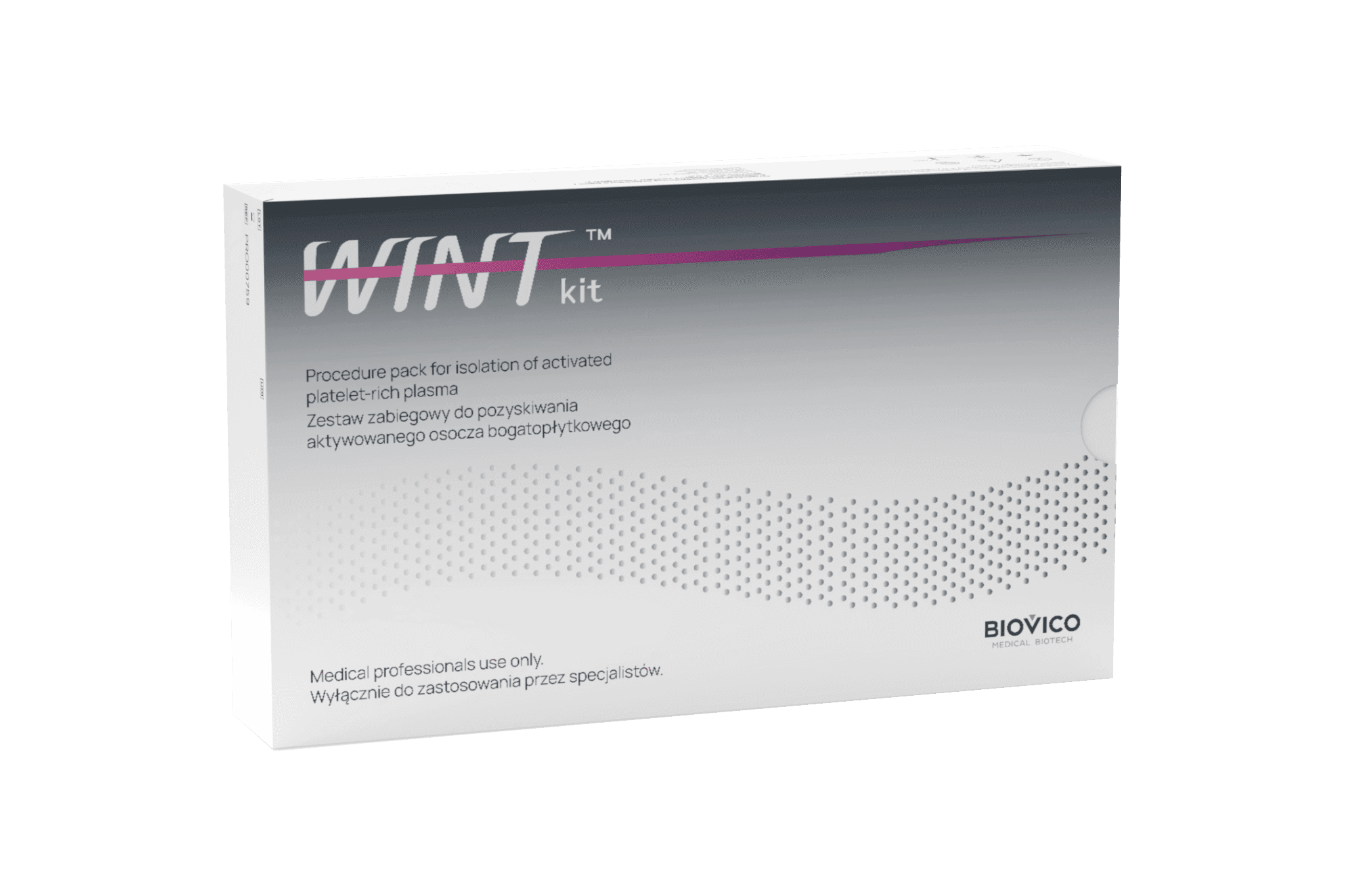
Motivated by this Wint™ kit contains a highly efficient separation device, which due to its unique design and presence of carefully selected borosilicate PLT activator allows to separate and isolate a very high number of DKK-1 protein in the final injection product.
As a result, the blood-derived product acquired by Wint™ separation device allows to obtain more than 2x higher DKK-1 protein concentration than in platelet-rich plasma and up to 5x higher DKK-1 protein concentration than can be detected in the plasma of healthy patient’s6.
Current strategy in OA therapies focuses on blocking the overactive canonical Wnt signaling pathway in the synovial joint tissues at the molecular level. There are numbers of known chemical inhibitors, but DKK-1 is one of the most potent and, what is important, it is endogenously produced Wnt signaling pathway inhibitor.
When DKK-1 protein binds to the Wnt signaling pathway receptor, it blocks the specific binding site of the Wnt ligand protein, preventing further pathway activation. This leads to β-catenin degradation complex activation and further β-catenin molecules degradation. Lack of β-catenin proteins in cell cytoplasm prevents the transcription mechanism activation and the factors responsible for OA progression cannot be produced by the chondrocytes or synovial like fibroblasts4.
Interestingly, PLTs are known, rich source of DKK-1 protein. When properly activated and stimulated, platelets can secrete increased amounts of this natural inhibitor. Thus, activated autologous blood-derived products, after the separation and concentration can provide an abundance of Wnt signaling pathway inhibitor. Further intra-articular administration of this can lead to the reduction of the degradation of articular cartilage and diminishing of the joint inflammation5.

- In OA patients decreased levels of DKK-1 in plasma and synovial fluid are observed7
- It has been shown that the level of DKK-1 protein is highly is related to the stage of the osteoarthritis → the higher stage of the disease, the lower concentration of DKK-1 in the patient’s plasma7
- Increased production of DKK-1 in synovial cells, chondrocytes and osteoblasts protects the articular cartilage from degradation and diminishes the progression of OA4,7
Materials: