Skincare products work on the surface, but your skin is built from the inside – from the protein, fats, vitamins and minerals you eat every day. Good nutrition for healthy skin will not replace sunscreen or a good routine, but it gives your skin the raw materials it needs to repair, stay hydrated and defend itself. Here is what the research tells us, and how to put it on your plate.
Why Diet Matters for Your Skin
Skin is your body’s largest organ, and it renews itself constantly. Building new skin cells, producing collagen and maintaining a healthy moisture barrier all require a steady supply of nutrients. When the diet is lacking, skin is often one of the first places it shows – as dryness, dullness, slow healing or flare-ups.
The Nutrients Your Skin Needs Most
Protein
Collagen and keratin, the main structural proteins in skin and hair, are built from amino acids. Include a source of protein at each meal: eggs, fish, chicken, yoghurt, lentils, chickpeas and beans.
Healthy fats and omega-3s
Fats help keep the skin barrier strong and skin supple. Omega-3 fatty acids, found in oily fish such as salmon and sardines, walnuts, chia and flaxseed, also have anti-inflammatory properties. Olive oil, avocado and nuts are excellent everyday fats.
Antioxidant vitamins
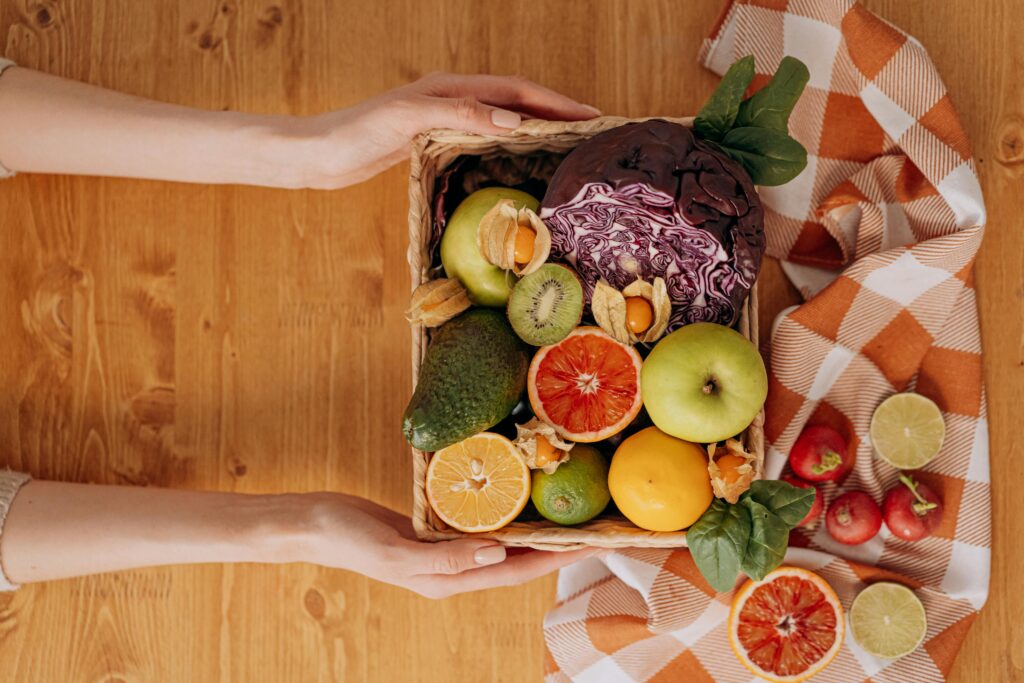
Vitamins C and E, and plant compounds such as polyphenols and carotenoids, help protect skin from free-radical damage caused by sun and pollution. Colourful fruit and vegetables are the richest sources. Read more in our guide to vitamins for skin.
Zinc and selenium
Zinc supports wound healing and normal immune function in the skin; it is found in shellfish, meat, pumpkin seeds and legumes. Selenium, another antioxidant mineral, is found in fish, eggs and Brazil nuts.
Water
Staying well hydrated is especially important in hot climates like the UAE, where heat and air conditioning both draw moisture from the skin. Water, herbal teas and water-rich foods such as cucumber, watermelon and oranges all count.
Foods to Enjoy More Often
- Oily fish two times a week for omega-3s and vitamin D
- Leafy greens such as spinach and rocket for vitamins A, C and E
- Brightly coloured produce – tomatoes, peppers, carrots, berries, pomegranate and citrus
- Legumes – lentils, chickpeas and beans for protein, zinc and fibre
- Nuts and seeds – almonds, walnuts, sunflower and pumpkin seeds
- Yoghurt and fermented foods to support a healthy gut
- Extra virgin olive oil as your main cooking and dressing fat
Foods That May Affect Breakouts
Research into diet and acne is still developing, but two patterns appear consistently:
- High-glycaemic foods – sugary drinks, sweets and refined white bread and rice cause rapid rises in blood sugar. Several studies suggest that a lower-glycaemic diet can improve acne in some people.
- Milk – some studies link high milk intake, particularly skimmed milk, with acne. Fermented dairy such as yoghurt does not show the same association.
Not everyone reacts the same way. If you suspect a food affects your skin, change one thing at a time and give it several weeks before judging.
A Simple Day of Skin-Friendly Eating
- Breakfast: Greek yoghurt with berries, walnuts and a sprinkle of chia seeds, or eggs with tomato, cucumber and wholegrain bread.
- Lunch: a large salad with leafy greens, chickpeas, grilled chicken or fish, avocado and an olive oil and lemon dressing.
- Snack: an orange or guava with a small handful of almonds, or carrot sticks with hummus.
- Dinner: baked salmon with roasted vegetables and a portion of brown rice, quinoa or lentils.
- Through the day: plenty of water, with extra on hot days or after exercise.
This style of eating, similar to the Mediterranean diet, is also linked to better heart and metabolic health – good news for more than just your skin.
Where Do Supplements Fit In?
Food should come first. Supplements can be useful when there is a confirmed deficiency – vitamin D is common in the Gulf region – or when your diet is limited. Choose products from reputable manufacturers that follow Good Manufacturing Practice (GMP), and ask a pharmacist or doctor before starting, particularly if you take other medicines.
Frequently Asked Questions
How long does it take for diet changes to show on the skin?
Skin renews itself roughly every four to six weeks, so give any change at least one to two months.
Does drinking more water clear your skin?
Staying hydrated supports overall skin health, but water alone will not clear acne. Think of it as one part of a healthy routine.
Is chocolate bad for acne?
The evidence is mixed. Sugary, milk-based chocolate may matter more than cocoa itself. Enjoy it in moderation and notice how your skin responds.
The Bottom Line
A colourful, balanced diet with enough protein, healthy fats, antioxidants and water gives your skin what it needs to look and feel its best. Pair it with sun protection and a consistent routine for the best results.
Explore our nutrition and wellness solutions or contact us to learn more.
This article is for general information only and is not a substitute for advice from a doctor, dermatologist or pharmacist. Always seek professional guidance before starting a new treatment, especially if you are pregnant, breastfeeding or managing a medical condition.